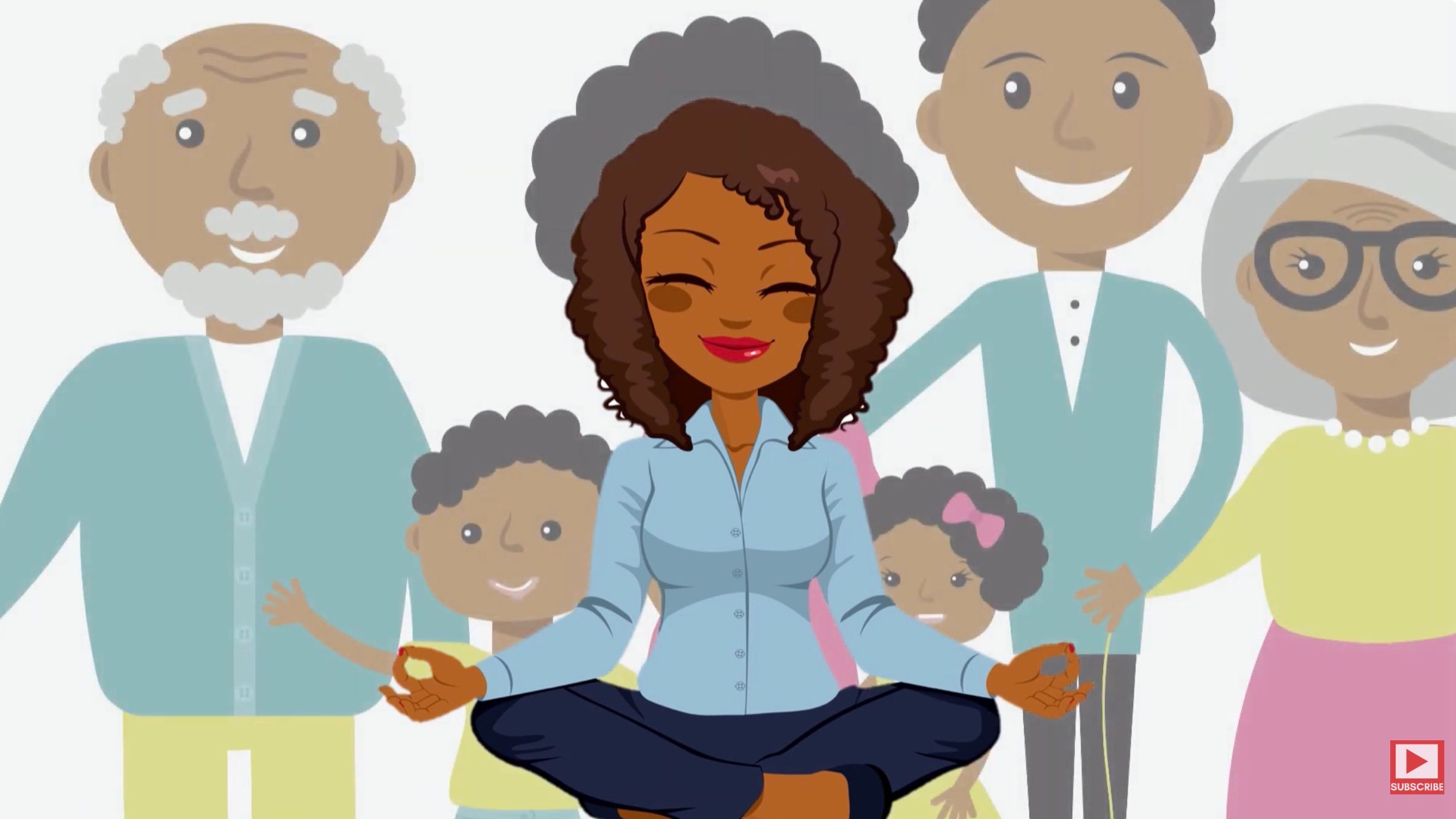
When it comes to supporting a loved one who is being treated for a substance use disorder, there are two key elements to effective family support.
1. Educated Consumer This is the term I use in RehabWorks for being informed: learning everything you can about addiction, how treatment works, and what recovery looks like.
2. Boundaries Restoring family balance and providing treatment accountability by learning how to identify factors that go into setting informed and healthy boundaries.
Several years ago I created a framework for using these two areas of family education to help families examine their role as treatment supporter for a loved one:
- where they currently are
- where they want to be
- how to get there
This framework maps two variables families are constantly juggling—how informed they are, and how they effectively they set boundaries—and shows how imbalance in either direction creates problems.
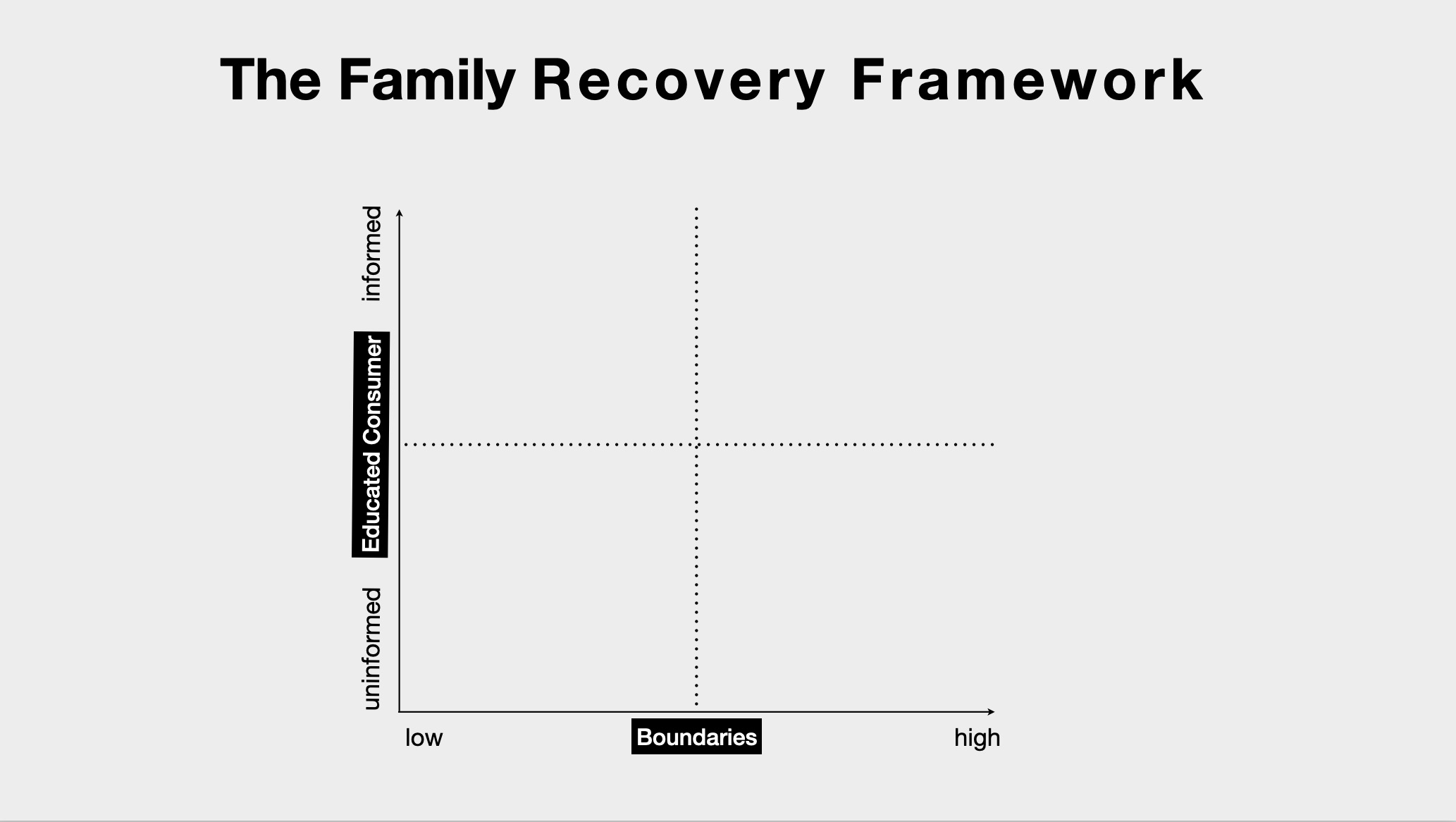
The Family Recovery Framework: Shows how education and boundaries interact—and how imbalance in either creates predictable challenges for families.
Axis A: Educated Consumer Understanding Substance Use Disorder, the treatment process, and implications for recovery.
Range: uninformed to informed.
Axis B: Boundaries Ability to establish healthy interpersonal relationships and avoid dynamics that allow the problem to continue
Range: low to high
Let's look at some examples of how this works:
a. Someone who scores high on the boundaries scale, but low on the Educated Consumer scale, may come across as being controlling.
They are very good at setting boundaries; they have no problem telling people what they can do or can't do. But they have no informed foundation for why they're setting those limits. The boundary they're setting may in fact be valid, but when it's coming from a "gut feeling" as opposed to an informed position, they may simply come across as being mean, unreasonable—or controlling.
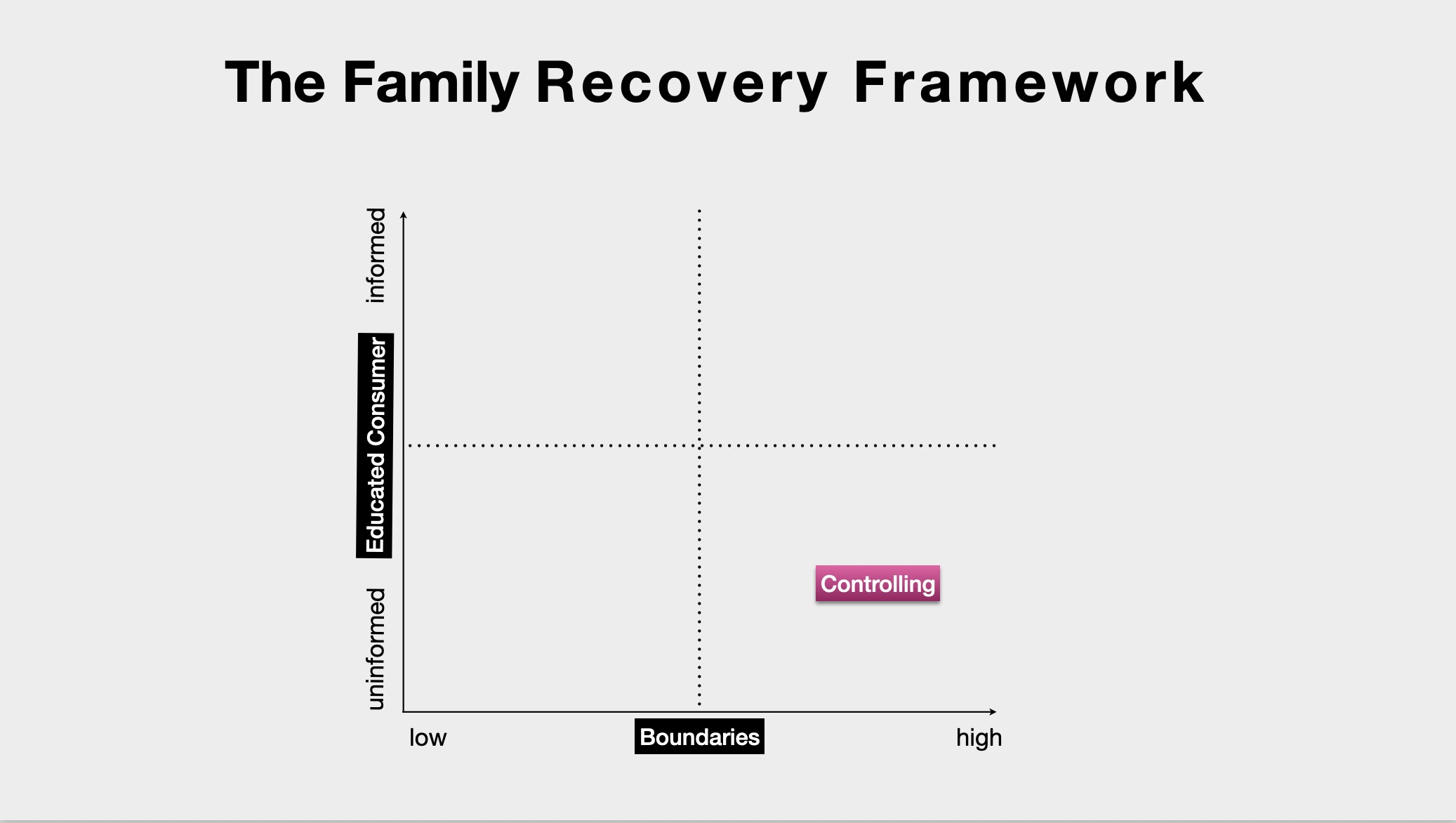
Boundaries without an informed foundation come across as controlling.
b. Someone who scores high on the Educated Consumer scale, but low on the boundaries scale, may end up feeling defeated.
This is the person who is reading everything they can about addiction, going to all the meetings, studying everything they can in order to help their loved one, but they never make any progress. They know how things are supposed to be, but they just can't seem to get there. They feel tired, discouraged, and eventually, hopeless.
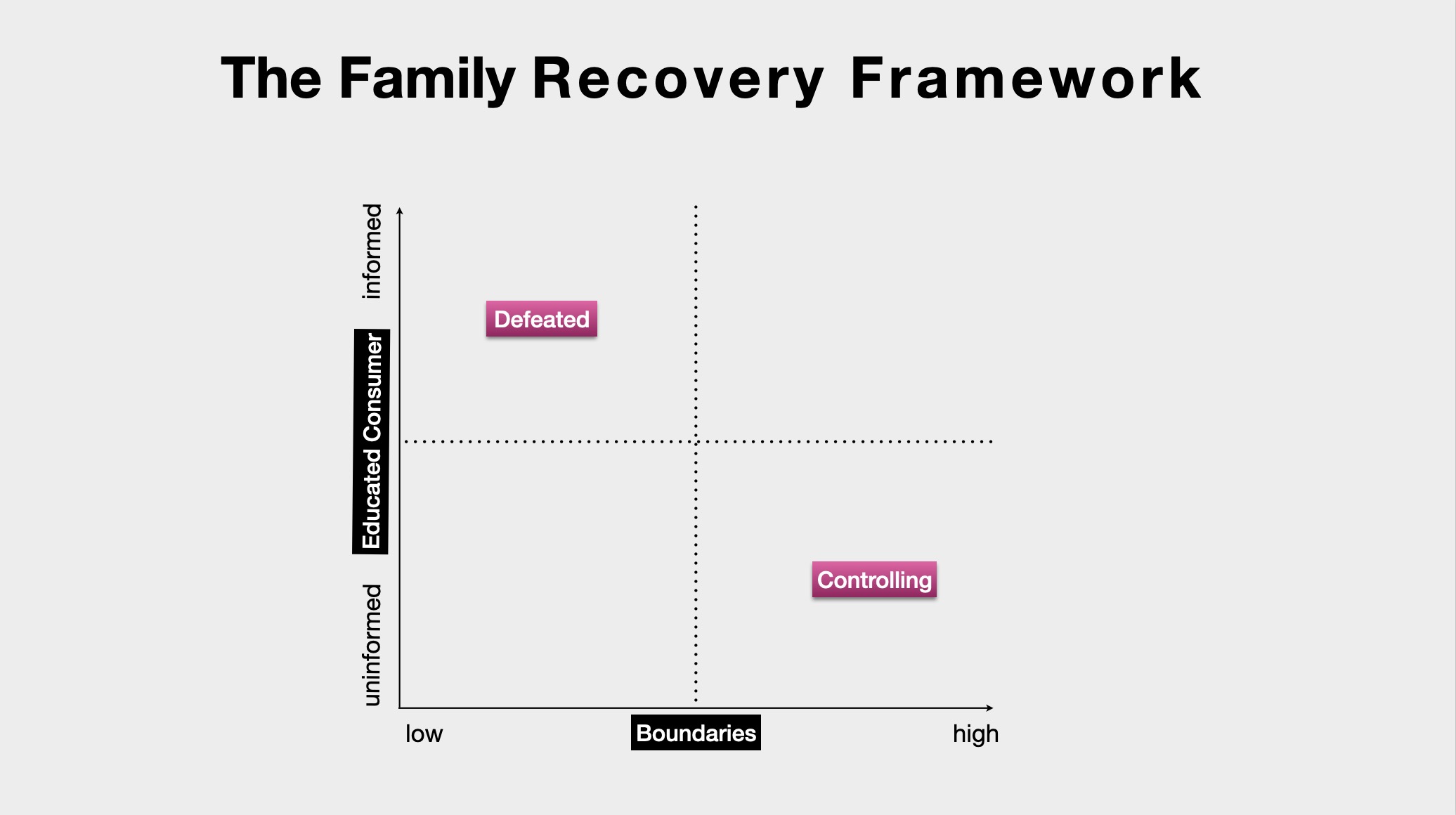
Being informed, but lacking ability to set effective boundaries leads to frustration and feeling defeated
c. In the case of someone scoring low on both the boundaries scale and the Educated Consumer scale, this is where we're going to find the chaos of living with an unaddressed substance use problem.
Many families are quite familiar with this dynamic:
- Not understanding what's behind all the erratic behavior.
- Reacting to inexplicable situations out of fear, hurt or anger.
- Trying to control situations without really knowing what appropriate responses would be.
This is the chaos that emerges when neither understanding nor boundaries are in place.
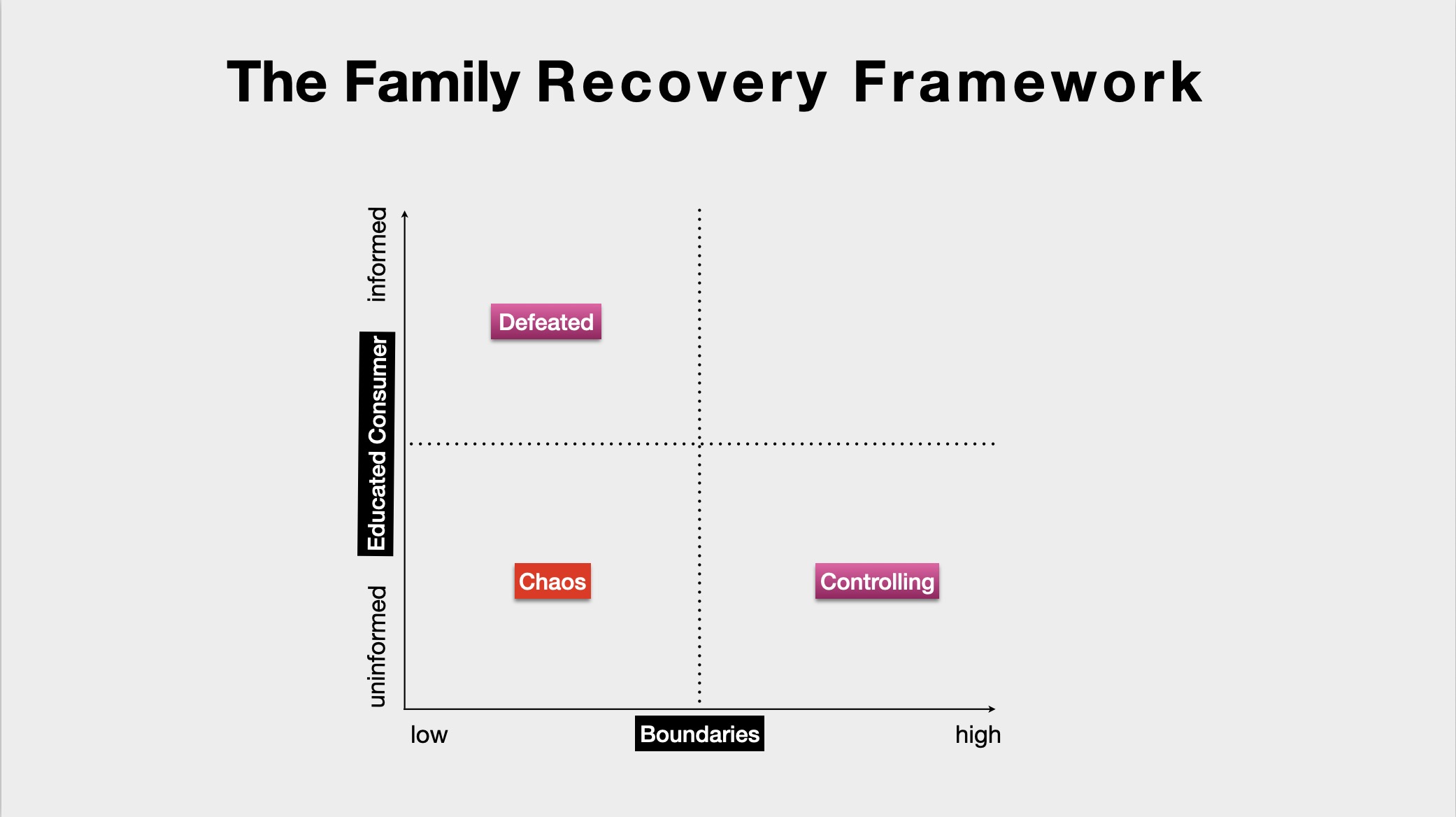
When families are uninformed and lack effective boundaries, chaos becomes the norm.
USING THE FRAMEWORK
At this point it is helpful to pause and have families identify where the see themselves in this process.
For many, this spells out clearly where they are:
"That controlling spot is exactly where I am—I get told that all the time!"
"I'm in the defeated spot. I definitely have trouble setting boundaries."
The beauty of this framework is that, not only does it validate the family member's experience by helping them see where they're at, it also provides clear direction on what they need to focus on to move forward to a more desirable spot:
"I really need to work on learning how to set boundaries."
"I've got a lot to learn about recovery."
The relational aspect of the grid provides the added value of being able to measure where they are. Some see themselves as squarely at the low end of one of the scales. Others may see themselves as having made progress in both areas and see themselves more toward the center, or even having progressed into the fourth quadrant, where they score high on both scales.
FAMILY RECOVERY
When someone scores high on both the boundaries scale and the Educated Consumer scale, that brings them to the place I like to refer to as "peace of mind."
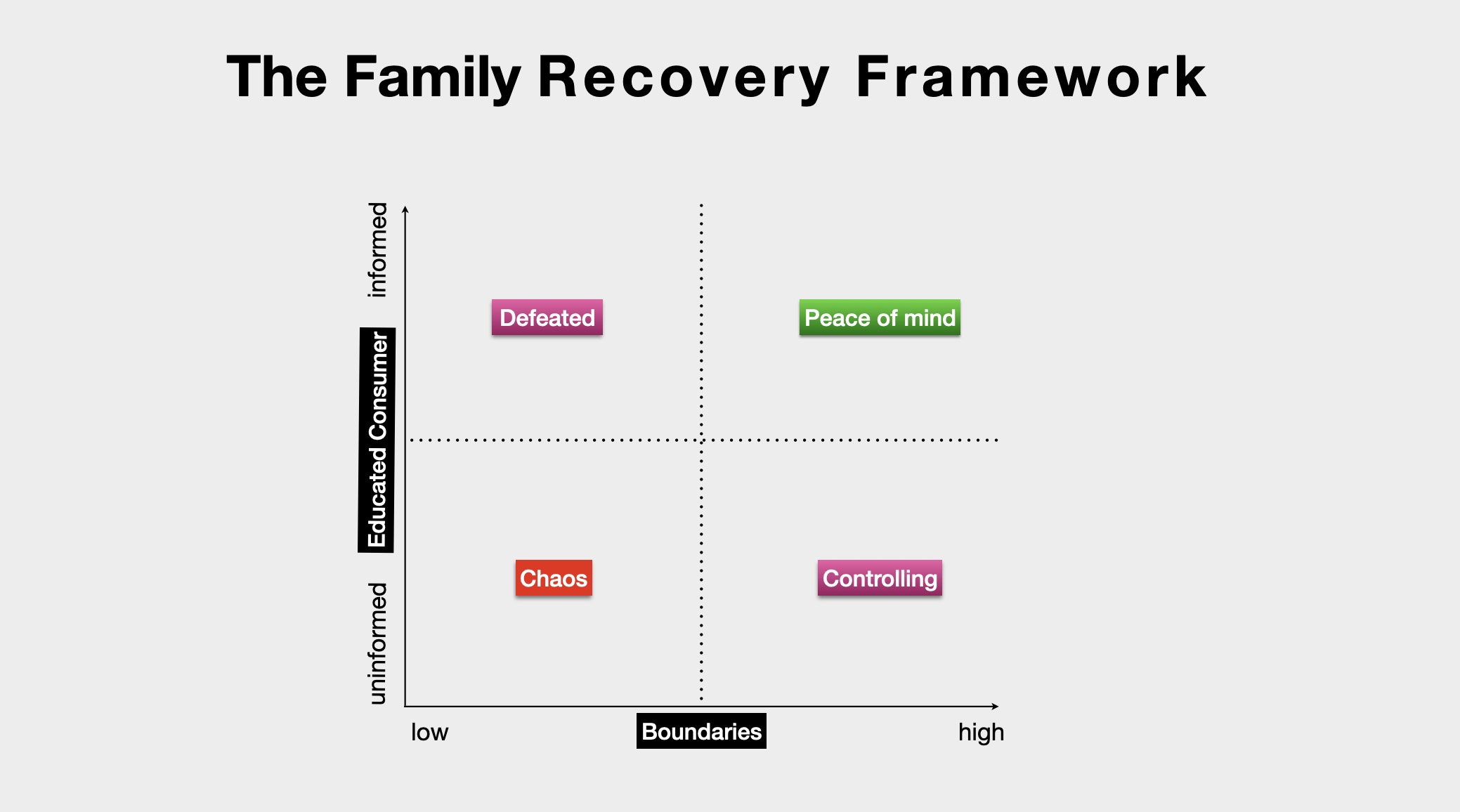
Families often hear the term “recovery” tossed around with regard to what they need to be doing for themselves when it comes to participating in treatment.
But how many have any idea what this actually means?
When I started using the term peace of mind to describe where families can arrive, I realized it closely mirrors what “recovery” really means for family members—not fixing the loved one, but stabilizing themselves.
In this framework, peace of mind emerges from the interaction of two variables:
- Being informed clarifies what effective treatment and recovery actually look like.
- Effective boundary-setting skills can be developed and strengthened.
The real power comes when these two variables work together: understanding treatment is what informs the boundary.
Families know exactly why they’re setting the boundary—and that it is indeed an appropriate boundary to be setting.
As a result, they don’t have to defend their position or apologize for it—and most importantly, they understand that their loved one’s response doesn’t have to affect their own peace of mind.
The good news for families is this:
Getting to their own peace of mind is in no way contingent on their loved one's progress.
They can get there even if their loved one makes no progress. Even better news is letting them know that doing what they need to do to establish their own recovery—is ultimately the best thing they can do to give their loved one the best chance for recovery.
VIDEO RESOURCE
Want to see this framework explained? I’ve recorded a short video presentation that walks through this model step-by-step.
You’re welcome to watch it for your own reference — or share it with families, clients, or colleagues.
WATCH NOW: Setting Boundaries: A Framework For Family Recovery
RESOURCES
For families:
If you are family member looking for support in addressing a substance use issue with a loved one, CLICK HERE
For providers:
For more information about using the RehabWorks Family Education Program as a resource for within your own program, CLICK HERE
Or, if you have questions and would like to learn more, I'd be happy to have a conversation. Schedule a time here: https://calendly.com/jimsavage/virtual-coffee-chat
FREE eBOOK
Sobriety Doesn't Have To Suck!
A Guide To Finding Excitement, Renewal, And Spiritual Fulfillment In Recovery
Stay connected with news and updates!
Join our mailing list to receive news, resources, and updates.
Don't worry, your information will not be shared.
(We won't send spam. Unsubscribe at anytime.)
