
It's no secret that AA or the other 12-Step programs are spiritual in nature. God, Higher Power, spiritual experience—these are all terms that are heard frequently around 12-Step recovery circles. And—quite understandably—this can be a turn-off to many new to sobriety, and in some cases this actually creates a barrier to recovery.
But it doesn't have to be this way.
After suffering a relapse in my own addiction in 1988—after I had already begun working in the addiction field—I gained a new appreciation for how important this "spiritual" aspect of recovery can be and the role this plays in achieving successful recovery. When I eventually returned to working in the field, I made it my mission to helps others have some type of experience that would create a shift in how they see things and inspire them to begin a journey of personal transformation. In some circles, that might be viewed as having some sort of "spiritual experience."
Over the past thirty years, I have had the privilege of helping hundreds of clients find a spiritual path that works for them; many of them proclaimed atheists or agnostics when coming to treatment. My approach has basically been a combination of two objectives:
-
Simply take the time to unpack and take a closer look at what is exactly meant when terms like "spirituality", "spiritual experience", or "higher power" are thrown around.
-
Create experiences that light a spark for wanting to explore more.
THE SPIRITUALITY OF ADDICTION
A main tenet of my work in helping substance use treatment clients explore the spiritual component of recovery has been in presenting a framework in which addiction and the desire for spiritual connection exist on opposite ends of the same spectrum.
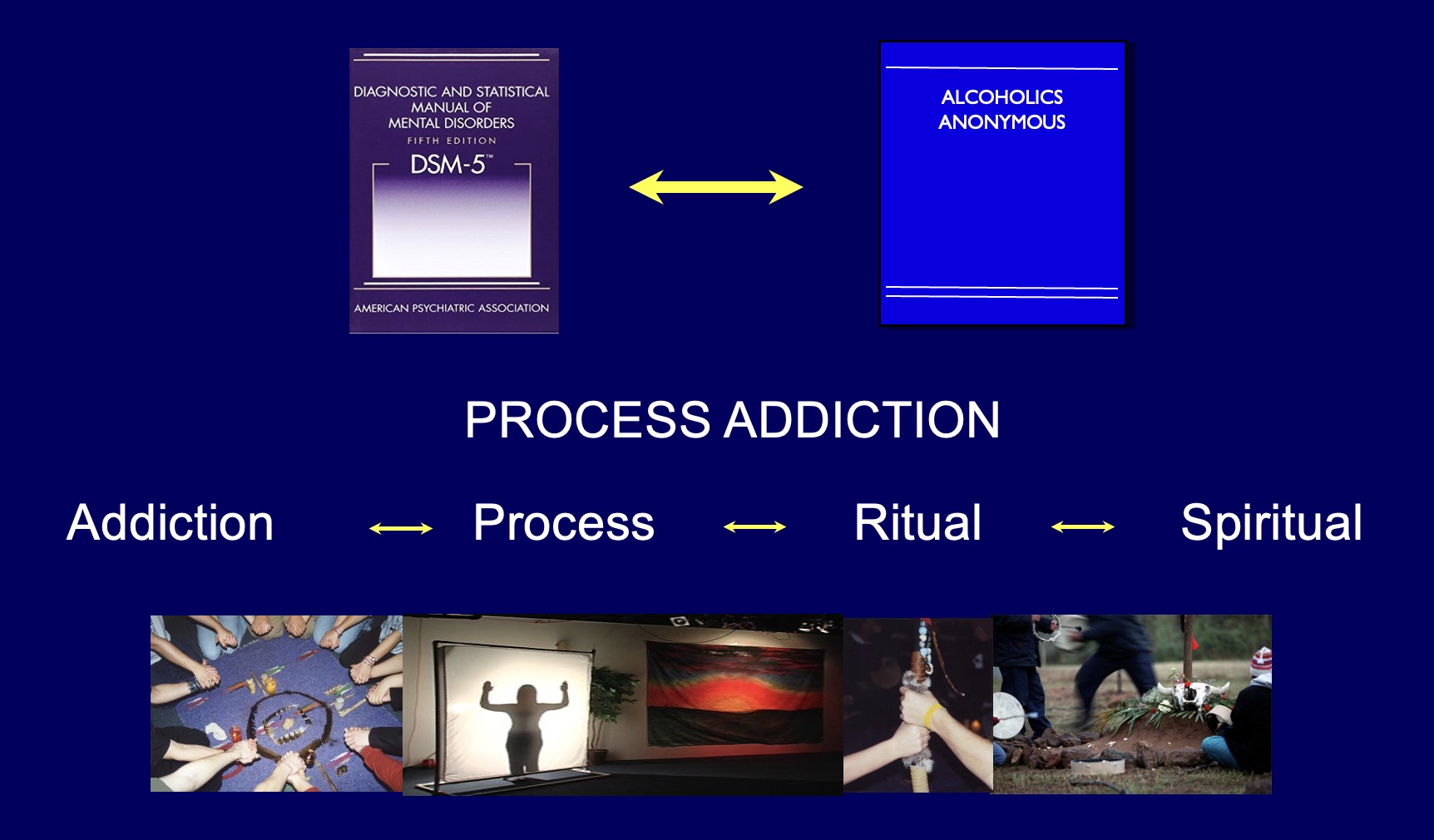
Carl Jung suggested that "the alcoholic's craving for alcohol was not unlike man's desire for wholeness." It follows that the following could be said of addiction in general:
Addiction: A search for relief.
Spirituality: A search for wholeness.
Jung also offered the fascinating observation that the Latin word for alcohol is "spiritus." The same word used to refer to the "highest religious experience" is used for what the alcohol was seen as—a depraving poison that consumes, eats away, and eventually dissolves that which it comes in contact with.
There is a lot to unpack in examining substance use when viewed from the perspective of 1) a natural tendency to want to alter consciousness—to change how we feel, and 2) the desire for wholeness—perhaps buried deep within us, subconsciously driving our actions.
"FILL ME UP, MAKE ME FEEL BRAND NEW"
When I was six months sober, I wrote a song about hitting bottom in addiction. One of the lines from that song said,
Fill me up, make me feel brand new. Like only you can do.
That song eventually became the iconic "hitting bottom" moment in The Journey, a rock musical I wrote to specifically teach about addiction and recovery. And those lines capture the quintessential dilemma of someone in the throes of addiction. In the stage production, right as those lines are being sung, the lead character is holding a joint in front of her face, struggling with not smoking it.
I use that moment to illustrate this dichotomy of addiction and desire for wholeness. She knows the good person in side of the her. She knows the person she wants to be. She's longing for wholeness.
On the other hand she knows that her addiction has her, and she doesn't see a way out.
"There's a hole in my soul where the wind blows through. Fill me up, make me feel brand new. Like only you can do."

"All That I Can Do,” from The Journey: A Musical Story of Transformation.
A moment from the song that captures the tension between addiction and the longing for wholeness. Watch a short clip from the song here: https://youtube.com/shorts/kfmINoXHRVA
Jung also talks about the transcendent function—a moment when, after being psychodynamically being stuck between two opposing concepts, the dam breaks, and all of a sudden it makes sense. Many people in recovery might relate this experience to what they refer to as their "moment of clarity." When all of a sudden it all made sense. And that was the beginning of moving forward on a path to recovery.
This provides a glimpse into what I mean by taking the time to explore exactly what is meant by "spirituality" relative to addiction recovery. Helping the treatment client see that there can be more to this than simply whether they believe in God or not can go a long way in helping them to achieve an enriching recovery experience.
WANT TO LEARN MORE?
I recently presented a webinar titled: The Spirituality Of Addiction . It was an in-depth discussion of the material discussed here. The replay is now available on my YouTube channel
WATCH WEBINAR REPLAY: The Spirituality Of Addiction
FREE eBOOK
Sobriety Doesn't Have To Suck!
A Guide To Finding Excitement, Renewal, And Spiritual Fulfillment In Recovery
Stay connected with news and updates!
Join our mailing list to receive news, resources, and updates.
Don't worry, your information will not be shared.
(We won't send spam. Unsubscribe at anytime.)
