The Stages of Change Model provides an effective tool in substance use treatment for helping clients:
- Build a solid foundation for recovery.
- Identify where they are in their recovery process.
This has been an integral piece on my own treatment curriculum for many years—for the substance user's recovery.
But how about family recovery?
When I created my RehabWorks family education, I initially included the Stages of Change simply to help families understand their loved one's treatment process and be able to identify potential cracks in the foundation before they're discharged from treatment.
For years now, this is one of the very first things I share with families when beginning treatment with their loved one. It is one of the most valuable tools I've found for helping families understand their loved one's treatment process and how to make sure their foundation for recovery is solid.
But here is where it really gets interesting.
After showing families how the Stages of Change apply to their loved one's recovery, I shift and say:
"And families go through this exact same process in establishing your recovery."
More specifically, I describe this as moving from revolving around their loved one, to the peace of mind that comes with recovery from their own codependency.
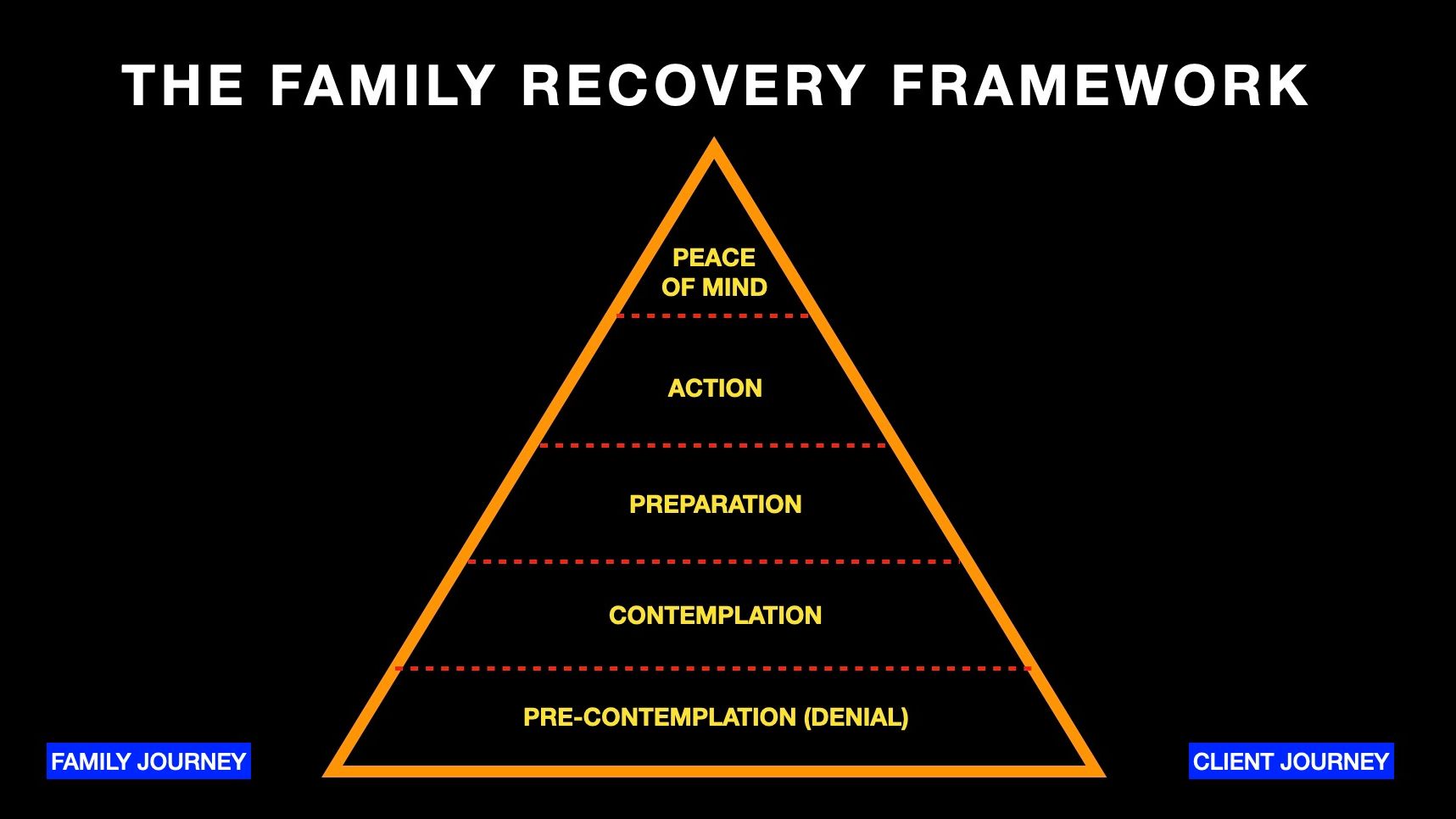
Here's a brief overview of the Stages of Change and how they relate to family recovery
5 Steps to Family Recovery
1. Pre-contemplation: Denial
This would be the denial stage: A problem exists, but they are unaware that a problem exists. For families addressing a substance use issue with a loved one, there may be two levels of denial:
a. They may be in denial about their loved one's problem; they may not know the extent of the use, or may not believe it's a problem.
b. The second area of denial—and quite honestly, perhaps the more challenging to recognize—has to do with their own participation in unhealthy dynamics of the family system. In other words, being able to see how their behavior has contributed to, or allowed unhealthy behavior to continue.
2. Contemplation: Make a decision
The second stage is called the Contemplation stage. This is where we begin to examine a behavior to make a determination if we think it is a problem or not.
Just as the substance user looks at his or her own substance use and begins to weigh certain aspects of behavior to decide if they think it's a problem or not, family members must take a look at their own behavior to make their own determination as to whether their part in the dynamics has been problematic or not. this might include looking at:
- How they've enabled or allowed unhealthy behavior to continue.
- How they've compromised their own values by allowing things to occur that they don't feel good about.
- If they've put themselves or others at risk or caused potential harm by not addressing the problem effectively.
3. Preparation: Make A Plan
If a person arrives at the conclusion that, "Yes, this is a problem," the third stage in the Stages of Change is called the Preparation stage. This is where one makes a plan to overcome the problem.
Again, for families supporting a loved one's recovery, this could be the initial effort they put into coming up with a plan for addressing their issue: researching treatment options, getting advice, etc. But for family members, the second level of addressing the "problem" might entail figuring out what they do to overcome their own problem—the codependency side of the dynamic. This could include looking into what kind of support would be appropriate for helping them get on the path to their own recovery. Potential options might be reading books, attending Al-Anon, or getting professional help in the form of counseling or treatment.
4. Action: Implement the plan
The fourth stage is called the Action stage. This is where you implement the plan to overcome the problem by practicing new behaviors. This is where the rubber meets the road. Notable about the Action stage is that it should last 3-6 months. There needs to be enough time to allow new behaviors to become routines. Rather than just be a fad we're into for a couple of weeks, it needs to become a lifestyle change; something we don't have to think about—it just becomes part of our daily routine.
This is where the family ends up having to sort of do double-duty, as there are two separate areas where they need to put new behaviors into practice:
- Become an informed supporter [treatment/recovery] supporter:
- Learn everything they can about what it means to be diagnosed with Substance Use Disorder
- Understand the treatment process and objectives
- Determine appropriate expectations for recovery
- Learn to set healthy boundaries (restore family balance)
- The difference between being "in control" versus "controlling"
- Recognizing what is within your control and what you can't control
- Eliminate enabling behavior
- Self-care: What I deserve in relationships and what is not acceptable
Just as the substance user may experience relapses, family recovery can carry its own types of relapse. Learning to identify "slips" and becoming self-regulating with regard to getting themselves back on track is part of the Action stage process.
5. Maintenance: Peace of mind
In the Stages of Change Model. the Maintenance stage is characterized by consistent symptom-free behavior. This would mean no signs of the initial problem. In our family recovery model, this is what we're going to refer to as "Peace of Mind." And this is a very nice place for families to get to.
For family recovery, arriving at the Maintenance stage means:
- They have clearly stepped out of the dysfunctional dynamic of being controlled by the substance user's behavior and are no longer engaging in behaviors that contribute to the problem.
- They are not pulled off track by the behaviors of others.
- They're setting informed boundaries: They know that they don't need to apologize, and they don't need to defend the boundaries they set.
And most importantly, they know that how others respond to their boundaries has nothing to do with their own peace of mind. This would be the true essence of "family recovery."
Family Support: The Paradox of Control
The final piece of this framework presentation is perhaps the most important thing families can hear:
The family's recovery is not contingent on their loved one's progress.
I let them know that they can reach that peace of mind place—even if their loved one stays stuck in denial and never moves past the Pre-contemplation stage.
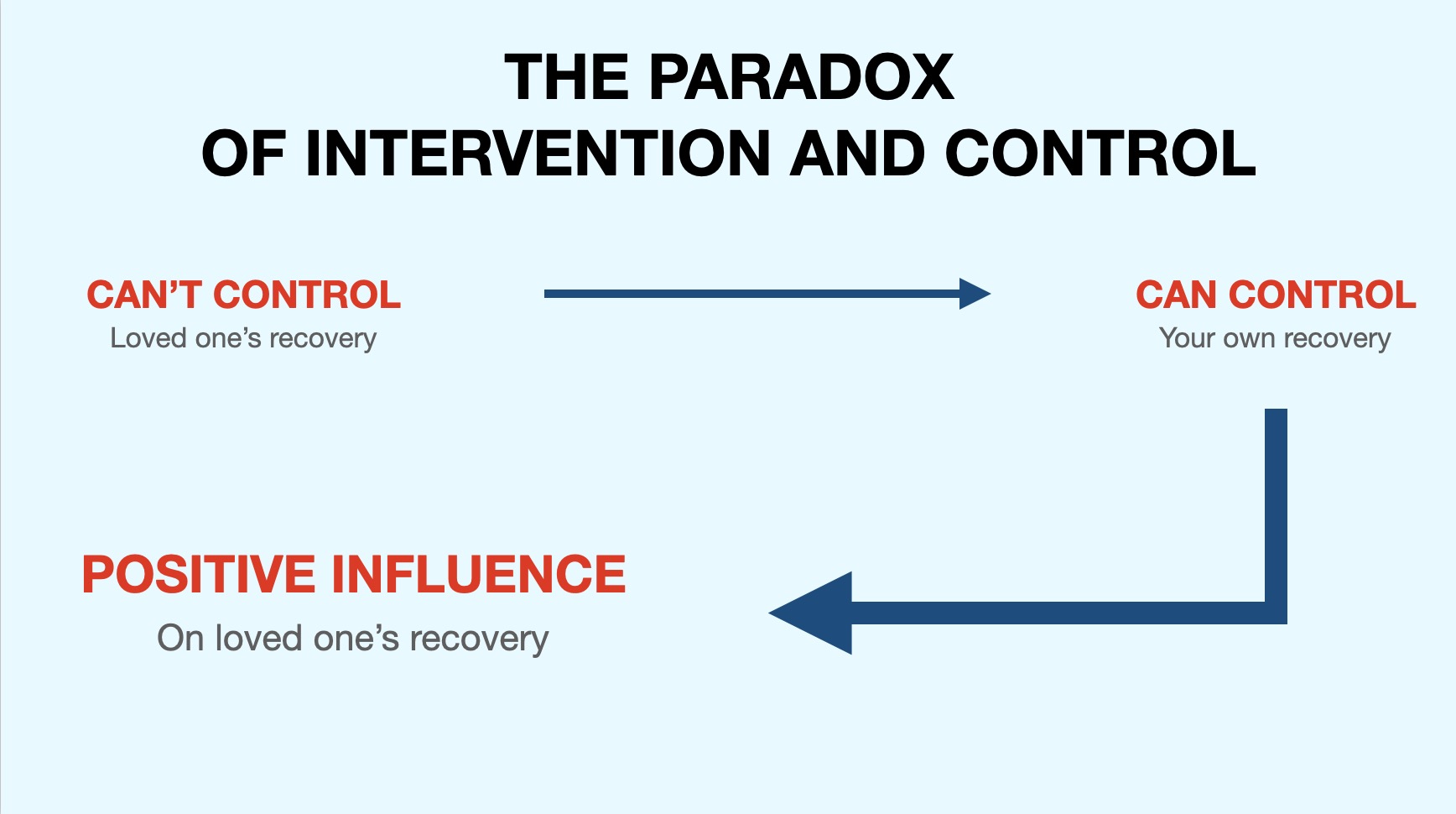
But then I share the really good news in what I call the Paradox of Control, which goes like this:
a. You can't control their recovery.
b. You can control your own recovery.
c. You doing what you need to do for your own recovery is the best thing you can do to support their recovery.
This is the framework I’ve been using for years to help families understand what it actually means to “focus on your own recovery.”
If you’ve been told to focus on your own recovery but don’t really know what that means, I’ve put this into a quick guide you can start using immediately.
👉 Download the 5 Steps to Family Recovery here
FREE eBOOK
Sobriety Doesn't Have To Suck!
A Guide To Finding Excitement, Renewal, And Spiritual Fulfillment In Recovery
Stay connected with news and updates!
Join our mailing list to receive news, resources, and updates.
Don't worry, your information will not be shared.
(We won't send spam. Unsubscribe at anytime.)
