
A mom left a comment on one of my videos this week. It was in response to the title of the video:
Does Rehab Work?
Her daughter had been to treatment nine times. Nine. And here's what she wrote:
"Not when this system pushes families out with little to no guidance. Treat the families long before their loved one wants treatment and you will see higher success rates. After 9x in treatment, we found our own way."
Seeing that comment got my dander up. Not because it surprised me—I'm all-too-familiar with tragic stories where treatment has failed clients. It was just one more of those comments that speak to areas where the current substance use treatment model comes up short.
Success Rates
As the owner of an adolescent outpatient treatment program for many years, one of the first questions I would get from families is:
"What's your success rate?"
I would often respond with a provocative:
"Lousy."
I would give them the harsh reality that substance use treatment success rates can be alarmingly poor. But I would go on to say my formal position on our success rate is that it's either:
0% or 100%. It depends on the individual.
And I would then say:
"You would be advised to consider treatment success as an interactive process in which the family has much more to do with the outcome than is generally realized."
That's the lead-in I use with families when I suggest that the best thing they can do to support their loved one in treatment is to become "educated consumers" — to learn everything they can about addiction, how treatment works, and what recovery looks like.
That's what was in my video this week.
And the mother who wrote that comment was pissed — and understandably so.
She was reflecting her experience of a treatment system that failed to meet her needs as a family member trying to support her daughter's treatment.
This is not to say there aren't facilities that offer excellent family programs. But even with the best of programs, the fact remains: Until we start checking families in along with the clients, there will always be an inherent gap between the client, the family, and the treatment team.
And those gaps are where important things fall through the cracks.
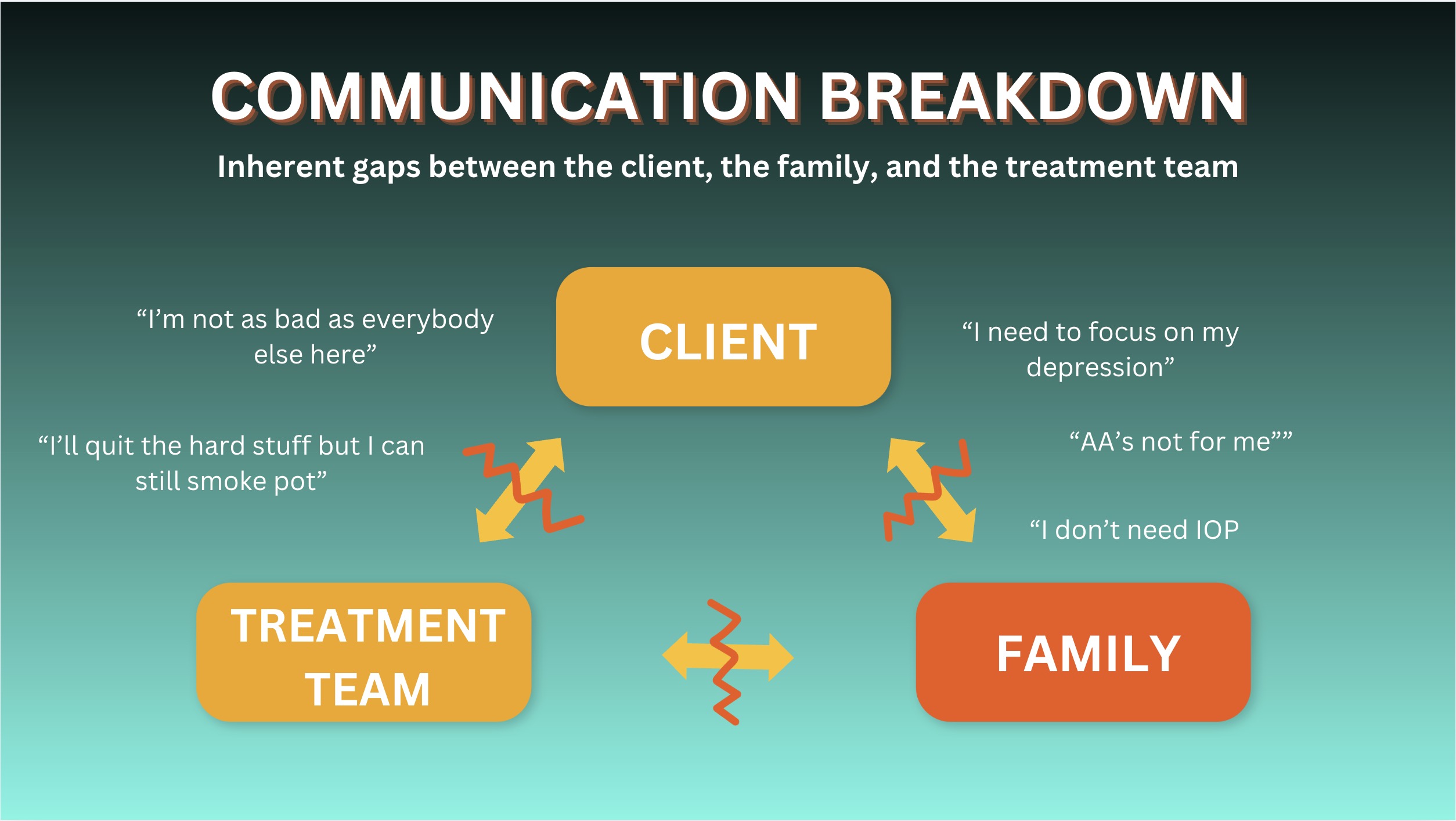
Gaps between the client, the family, and treatment team lead to important information falling through the cracks.
Here's a simple example of what I mean by gaps.
Even with the best programs, it may be several days before the family is engaged in the treatment process. That may be an initial phone call from a primary therapist or the family program director. They may set up a family therapy session, or let the family know about a weekly Zoom call for families, or that a family education session is on Sunday afternoons. Or they may let them know about the intensive family weekend that happens once a month.
In the meantime, the family might be getting calls from their loved one:
"Get me out of here. I'm not as bad as everybody else here!"
The family has no idea how to respond. And the client discharges against medical advice. Before the family has even had a conversation with the treatment team or received any education that could have prepared them for dealing with the situation.
That's just one example of the many ways important information ends up falling through the cracks and leads to a poor treatment outcome.
Bridging The Gap
After running my own adolescent outpatient program for over ten years, two things became undeniable:
- How much impact families can have on treatment outcomes
- How much support families need navigating the process
So I turned my attention directly to working with families. In 2014 I wrote Rehab Works! *— a guide for families navigating a loved one's addiction and treatment. I then built an online educational platform based on the book, designed specifically for treatment facilities to offer as part of their family programs — giving families access to educational content from day one of treatment, which provides answers and tools for navigating those first critical days, often before they've even heard from the treatment team.
My intention was to provide a solution to the inherent problem of the gaps between the client, the family, and the treatment team. The RehabWorks course essentially puts the family in the classroom with the treatment clients — learning what they're learning about addiction and recovery. And this can make a huge difference in treatment outcomes.
For example: I have one case study where a mother completed the entire course within the first week of her son's treatment. When her son started complaining about treatment and wanted to leave, she was fully prepared:
- She knew how to respond to his claims that "It's only marijuana, it doesn't cause me any problems."
- She knew how long an appropriate treatment process should last.
- She had gained tools for setting boundaries.
Her son ended up completing treatment and agreed to an appropriate continuing care plan following discharge from his primary treatment.
Here's how much of an impact families can have on treatment outcomes. Rather than remaining a hopeful bystander, she became a proactive participant in her son's recovery.
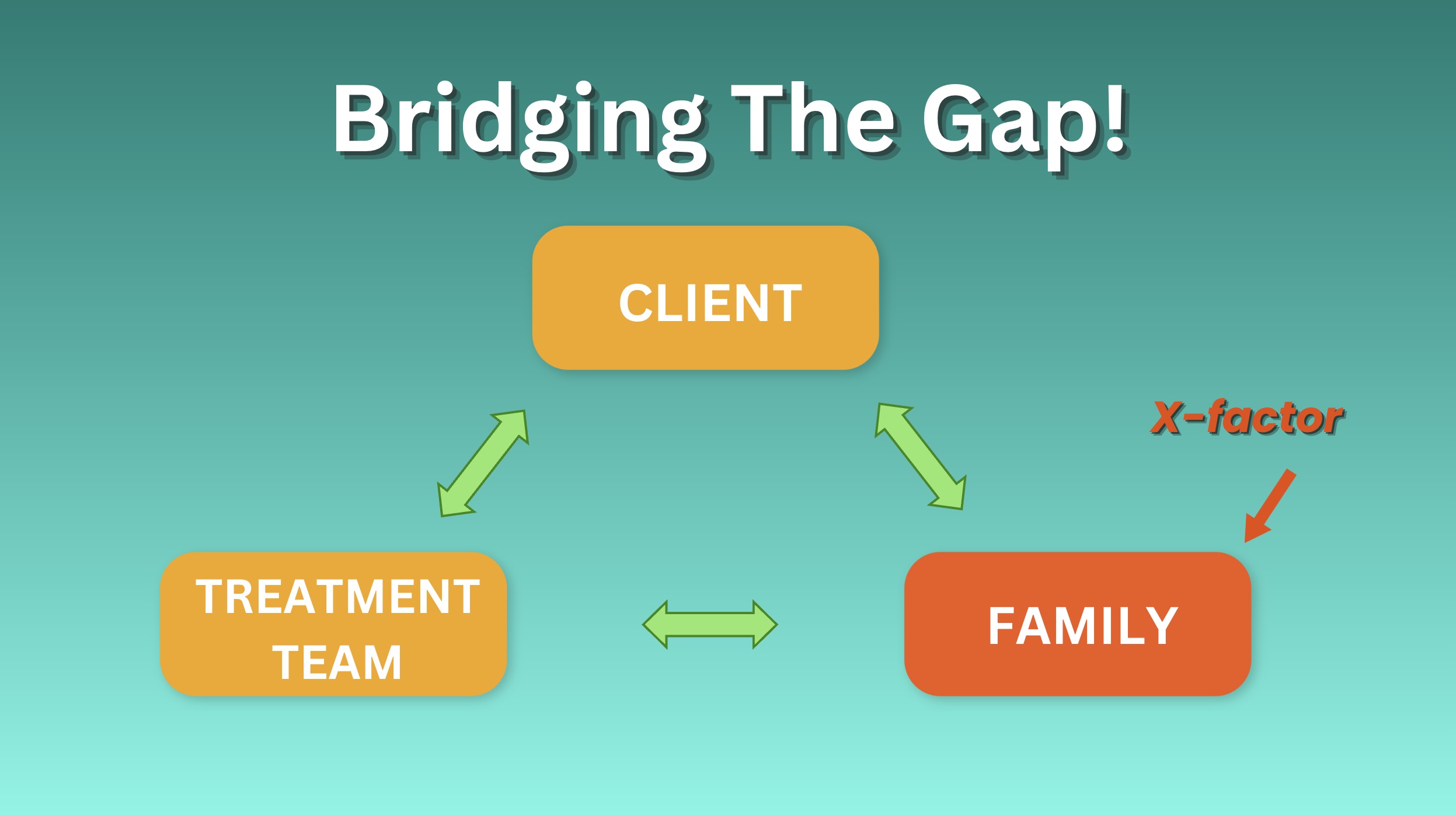
Effective family support can have a significant impact on treatment outcomes
Time To Step Up Family Support
As I have continued to provide support to families — through weekly Zoom calls, individual coaching, and public webinars — one sobering fact has become increasingly clear: Families are desperate for as much support as they can get.
So I've added the final piece: A complete program for families that supplements what they receive from their loved one's treatment facility. (The unfortunate truth is that many families get nothing at all.)
The RehabWorks Family Recovery Program is an 8-week structured process that gives families the same kind of clinical framework their loved one is getting in treatment.
Part A. Education: Everybody on the same page about what it means to have a "problem."
Part B. Boundaries: Tools for restoring family balance.
Part C. Continuum of Care: Understanding the treatment process and avoiding cracks in the foundation.
I created this program because the gap is real. I see it every day.
Like the mom who left that comment. She found her own way. But she shouldn't have had to. That's the whole point:
"Your loved one has a program. Now you do too."
If you'd like to learn more about this new program, please reach out.
You can also learn more about the program here: RehabWorks Family Recovery Program
*Big news: Rehab Works! is currently in its final stages of a timely revision. The fully updated 2026 edition — A Modern Framework for Family Recovery — will be available soon. Join my mailing list below to be among the first to know when it's released.
FREE eBOOK
Sobriety Doesn't Have To Suck!
A Guide To Finding Excitement, Renewal, And Spiritual Fulfillment In Recovery
Stay connected with news and updates!
Join our mailing list to receive news, resources, and updates.
Don't worry, your information will not be shared.
(We won't send spam. Unsubscribe at anytime.)
