I was having coffee with a colleague one day, years ago. I had just made the decision to sell my outpatient treatment program to turn my attention to working directly with families. The experience of running an adolescent IOP program for over a decade taught me:
-
How much of an impact the family can have on improving treatment outcomes.
-
How much help families need in learning how to provide the kind of support that leads to those improved outcomes.
I still remember the moment my friend looked at me, and with total exasperation uttered:
"How do we get families more engaged in treatment?"
And I continue to hear that from providers today.
Despite research demonstrating that meaningful family involvement can improve treatment outcomes, finding practical ways to educate and engage families remains a challenge for many treatment providers.
Two Sides Looking for the Same Solution
A treatment provider reached out to me recently and made the candid admission:
"I own a PHP/IOP and sober living program. And frankly, my family program is non-existent."
I heard the same exasperation in his voice that I heard in my colleague's voice years ago.
Whether it's the logistics involved with families simply being able to attend programming, families who simply don't want to participate, or budget constraints that limit the staff and resources available for family services, many providers feel painfully stuck.
They know how important family involvement is, and they want to provide it. At the same time, they feel hopelessly stuck in being able to achieve that goal.
It's not that they don't care. They genuinely feel stymied.
But I am also aware of what it's like for families on the other side. Having run support groups for families whose loved ones are currently in treatment for the past twelve years, I have had the opportunity to witness their experience firsthand.
They are overwhelmed.
Some are angry.
Some are terrified.
Some feel hopeless.
Many have been living with the pain and chaos of dealing with their loved one's addiction for years. They want to help, but don't know what to do.
Years ago, we began using the expression "deer in the headlights" in my family support groups to describe how new members often feel when they first arrive. It's consistently met with vigorous nods of agreement.
We use the expression affectionately, to reassure newcomers that we've all been there. And that before long, things will begin making sense, they'll feel less overwhelmed, and they'll be on their way to finding their own peace of mind.
Many of them are in the position of having checked their loved one into a facility and now are simply waiting to hear from "the counselor." But the unfortunate reality is that communication between treatment centers and families can sometimes be minimal, particularly during those first critical days. Even when programs make an effort to contact families promptly, that initial conversation may consist primarily of explaining when the first family session or group will take place.
And there's nothing else for the family to do but go back to waiting.
Consider the unfortunate irony:
✔️ Providers want to engage families effectively.
✔️ Families want to be engaged.
❌ Both are frustrated.
They both want the same thing. What's missing is a practical way to bring them together.
Bridging The Gap
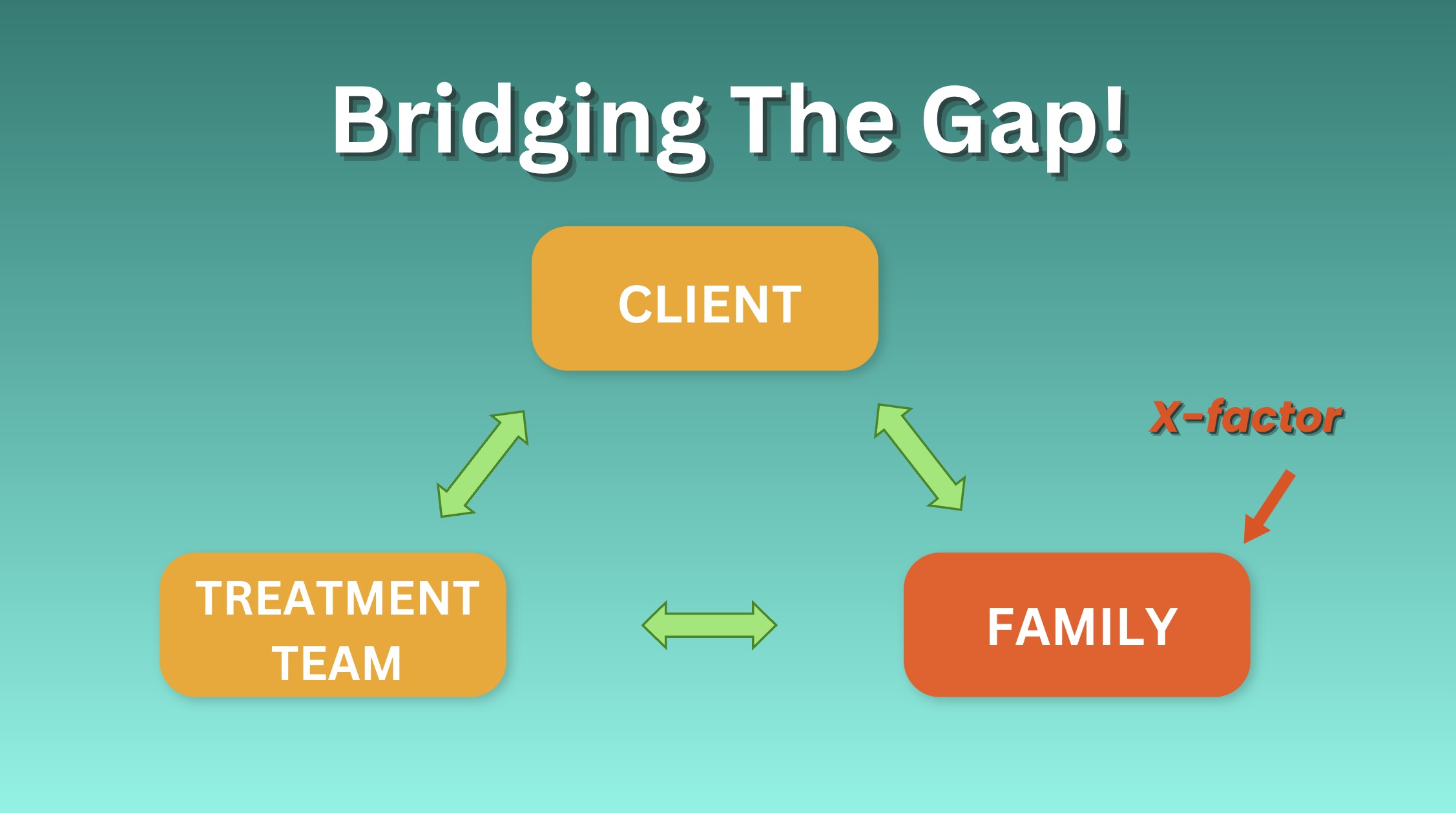
When I decided to turn my attention to working directly with families, I wrote a book called Rehab Works! This was essentially a guide for teaching families how to provide effective treatment support. I went on to create an entire online family education program called RehabWorks, which was specifically designed to provide a solution for bridging the gap between the client, the family, and the treatment team. It consists of videos, interactive worksheets that can be uploaded directly to treatment staff, and specially developed PDFs excerpted from my book, with additional commentary tailored to how families can apply the material to their current treatment situation.
I built the program for treatment facilities to be able to engage families from Day 1 of treatment.
It's an online platform that families are sent access to at the time of admission. I ran the idea by an admissions person from a treatment center one day, asking him how he would like to be able to give families a link to access the program on the way home from dropping their loved one off at treatment. His immediate response was:
"The average time families spend traveling to admit loved ones to our facility is 3.5 hours."
I used that image of a family logging into the program in the car, or on the plane on the way home, when I began creating the program. The opening welcome video literally says:
"Hi, I'm Jim Savage. And if you're watching this right now chances are you have a loved one who's being treated for a drug or alcohol problem. Some of you may even be on your way home from just having dropped them off in treatment..."
The program goes on to deliver education about substance use disorder, the family's role in supporting treatment, setting boundaries, and becoming proactive participants in their loved one's recovery. As I began showing the program and testing it out, I landed on the line I use to articulate the foundational principle underlying the program:
Improving treatment outcomes through effective family support.
And it accomplishes this by bridging the inherent gaps between the client, the family, and the treatment team.
Family Engagement in Action
In 2019–2020, I conducted a nine-month beta test of RehabWorks at an adult addiction treatment facility.
NOTE: At the time of the beta test, the course consisted of three modules featuring short videos, quizzes, worksheets, and PDF materials. Each module takes approximately 1.5 hours to complete. A fourth review module has since been added to the curriculum.
During a 15-week evaluation period, we documented the following regarding family registration and participation:
-
76% of family enrollment opportunities resulted in course registrations.
-
83% of registered participants completed the first educational module.
-
35% of those completing Module I did so on the same day they registered.
-
100% of participants who completed Module I did so within three days of registering.
-
46% of Module II completers finished it on the same day they completed Module I.
What these numbers demonstrated was that when families were given access to structured education, many were eager to get started—and moved through the material quickly.
But perhaps even more revealing was what families reported learning.
At the conclusion of each module, participants were asked to identify the most valuable information they had gained.
Their responses included:
-
"I thought rehab was simply detoxing from substances."
-
"I really understand now how important family participation is."
-
"How to not have wiggle room and to set firm expectations and boundaries."
-
"Setting boundaries and not being afraid to say 'that doesn't feel like recovery'."
-
"The importance of setting a foundation, not skimping through the stages of change, and having a realistic perspective of how long the treatment process takes."
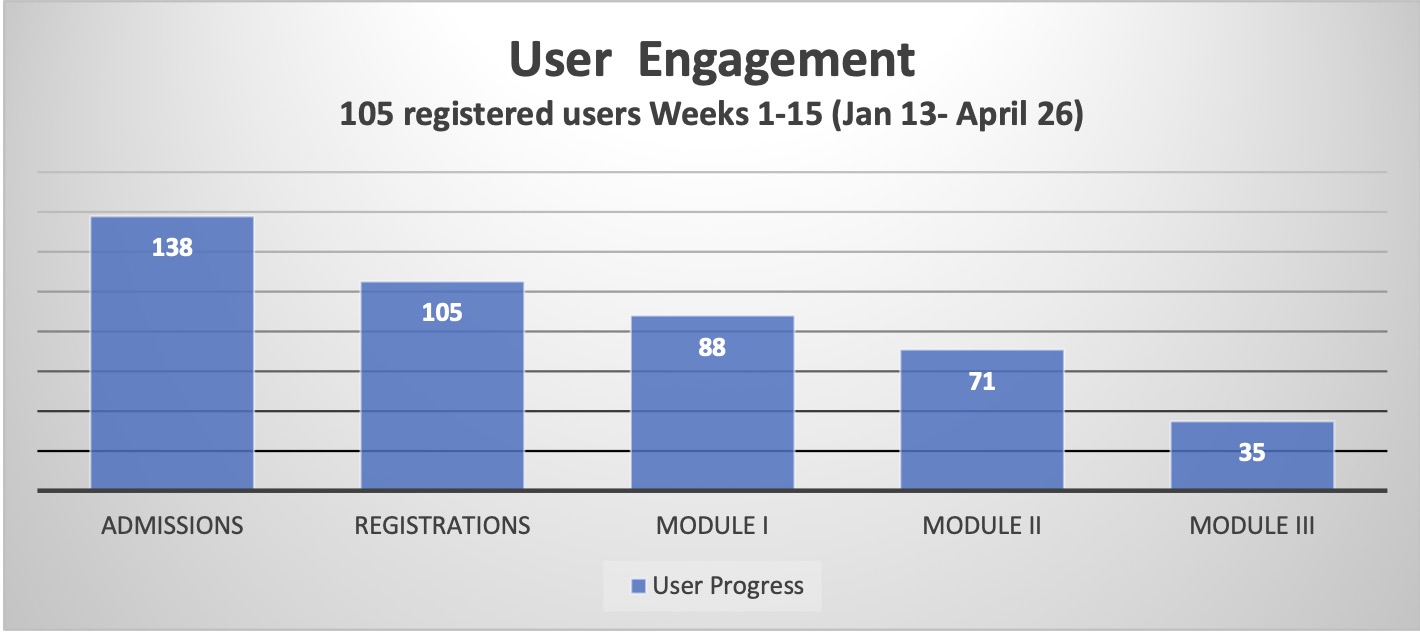
RehabWorks beta-test results, 2020: Family registration and module completion during a 15-week evaluation period. Twenty participants were still actively using the program at the end of the evaluation.
Consider the significance of families learning these things during the critical first days of treatment. At a time when their loved ones may be struggling with denial, resistance, or wanting to leave treatment prematurely, these families are already becoming better prepared to recognize and respond to those challenges—and support the treatment process rather than being swayed by their loved one's objections to treatment and inadvertently undermining it.
This difference—between the family knowing how to respond and being swayed by their loved one's pleading—can sometimes mean the difference between an AMA discharge and successful treatment.
This is precisely what I mean by the family being the X-Factor in treatment outcomes.
Out Of the Problem—And Into The Solution
Since I created RehabWorks in 2019, it has been used by treatment facilities nationwide. As part of the program I run a weekly group call with all course users.
When I began doing these calls, something that really made an impression on me was hearing how appreciative families are of having access to comprehensive education and support from the very beginning of their loved one's treatment.
I regularly hear comments along the lines of, "This is the best treatment program our loved one has ever been in," or "We've never had this kind of family involvement before."
And every week, I'm reminded of that unfortunate irony I described earlier.
Providers want to engage families. Families want to be engaged. Yet both so often feel frustrated by the obstacles that stand in the way.
What I'm seeing every week is what happens when we remove some of those obstacles.
Families are receiving valuable education, in a remarkably convenient process—and they really appreciate it. They're becoming more informed and better prepared to support treatment. And they're grateful to the facilities making that possible.
We're bridging the gap.
And here's the ironic reversal:
Family engagement increases, while the burden on treatment providers decreases.
In the process, families are being given the tools to move from hopeful bystanders to proactive participants in their loved one's treatment.
Interested in bringing RehabWorks to your treatment facility?
I'd welcome the opportunity to show you how RehabWorks can help your organization provide comprehensive family education and support from Day 1 of treatment, while reducing the demands on your clinical staff.
Schedule a brief demonstration to see the program in action and discuss how it can be integrated into your existing services.
FREE eBOOK
Sobriety Doesn't Have To Suck!
A Guide To Finding Excitement, Renewal, And Spiritual Fulfillment In Recovery
Stay connected with news and updates!
Join our mailing list to receive news, resources, and updates.
Don't worry, your information will not be shared.
(We won't send spam. Unsubscribe at anytime.)
